Unknown's avatar

About Paul Michael Anderson

Paul Michael Anderson is a writer, editor, journalist, and teacher living...somewhere

Let’s Start a Thing: Someone Else Saturday (Chrome-embossed cover first edition in tri-color format)

Don’t look at me like that about the title of this post; I was a comic book kid of the ’90s.

Anyway.

Unless you’re an iconic writer whose every word gets adapted into a film that’ll at least make its budget back, you’re on social media, whorin’ yourself out like your pimp is three seconds from going Wayne Brady on your ass.

If you have any kind of soul, it feels kinda icky, like binge-watching Toddlers & Tiaras (don’t ever watch that).  Also, it might not be all that effective–people get numb to your constant Amazon linking, the Facebook algorithm laughs at your puny attempts of outreach and you only get “liked” by your grandmother–who would never, ever actually read what you’re posting (let alone the book itself).

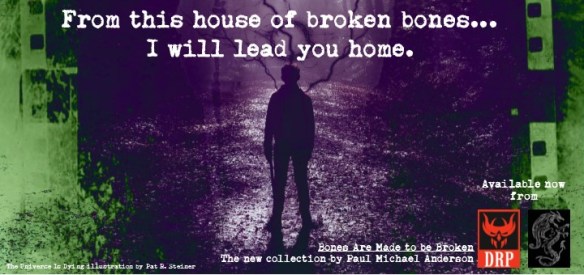
I’m not immune to the icky feeling, nor Facebook laughing at me.  I’m fucking proud of Bones Are Made to be Broken (buy it here), but I hate it when authors ask me three seconds after accepting their friend requests to “like” their page; and I hate their bot-like posting of their fucking book; and their “sponsored” ads, with their “in the tradition of Stephen King” (spoiler alert: no, it’s not).  I recently posted the picture below:

blurb-ad-pic

…and that’s enough whoring myself for now.

You know what works, though?  Beyond press in high-traffic areas and sites (those help; don’t ever get me wrong on that)?

Word of mouth of other books.  Things you’ve read.  Things you’ve liked.  Everyone dismisses you singing your own praises, but they cock their head when you rave about someone else.

So!  Here’s a thing: Someone Else Saturdays (#SomeoneElseSaturday, which you should totally do in line with #FridayReads).

Link to the good shit you’re reading, or have read.

To start us off, here are mine:
51m11svohxl-_sx321_bo1204203200_

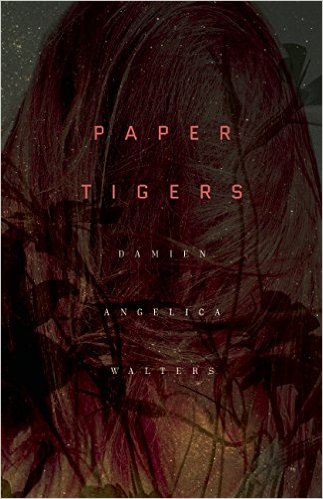
Paper Tigers – Damien Angelica Walters

This was my favorite book last year and was so fucking good.  Walters takes the tropes of haunted possessions, sordid pasts, and broken protagonists (and, in horror, those are pretty trope-y tropes, if we’re being honest) and inverts and twists and messes with them to create such a goddamned great masterpiece.  It’s the book that’s on the tip of my tongue whenever someone’s just thinking of asking for a book rec.  Walters has a short story collection coming out, called Cry Your Way Home, and she’s just as good in the short form.

stranded

Stranded – Bracken MacLeod

I just read this one and was blown away by how seamlessly MacLeod was able to transition from a standard feet-on-the-ground thriller and go total Outer Limits.  I’m seriously struck dumb by that motherfucker of a feat.  So good.

511ygi55hhl-_sy346_

The Green Kangaroos – Jessica McHugh

When I want to read something fucked-up and out there, I go to Jess.  This futuristic story on drug abuse and the lengths people will go to kick addictions was cringe-y (if you’re a dude, you shoot up by injecting in the balls–just typing those words makes me cross my legs) but awesome.
7840

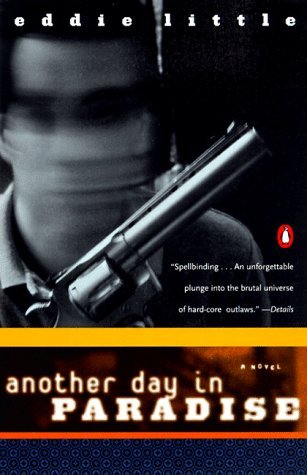
Another Day in Paradise – Eddie Little

This was my introduction to true crime fiction–not mysteries or “capers”, but down and dirty crime.  It follows the loss of innocence of Bobby Prine–a stand-in for Little, since a lot of this was twisted autobiography–as he goes down the path of addiction and robbery.  So goddamned good.  This book led me to guys like Shane Stevens and Jim Thompson, who I think of even before Elmore Leonard or Richard Stark.  This book was followed up by Steel Toes, but then Little died of a heart attack, and the trilogy was never finished.  The prose is clunky but crackles with nervous, shooting-speed energy.  I love it.   {This book’s out of print, but you can probably find it at Abe’s Books, or something.}
51ohh04ry6l-_sx331_bo1204203200_

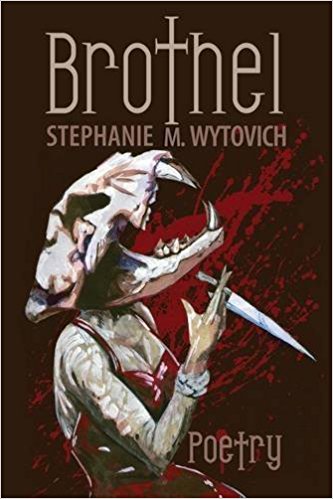
Brothel – Stephanie M. Wytovich

I read this in manuscript form and I loved it right away; erotic and charged and propulsive, every verse just yanks you along down darker, more intimate corridors.  I envisioned these poems as the nightly journal entries of someone who works in a brothel–just because I liked that idea.

So!  Let’s make this a thing–every Saturday, link to a book you liked that you didn’t write and you weren’t obligated to say you like (which is kinda like kissing a sibling on the cheek).

#SomeoneElseSaturday
brokenhousehome

Dispatches from the Goodreads Reading Challenge Wasteland: Jonathan Maberry’s The King of Plagues

(QUICK NOTE THAT I BEGIN EVERY WASTELAND DISPATCH WITH:

(Last year, 2016, I found myself struggling to get through a book as quickly or with as much enjoyment as I used to.  No shade thrown on those books, but my life had become busier and it was easier to read io9 or cruise my Facebook newsfeed than crack open a book.  I didn’t like that and the Goodreads Reading Challenge seemed like a nifty way to get my head back in the game.  Of course, after setting my challenge, I realized I had way overshot my count in comparison to others–some of them reviewers, for Christ’s sake–so this became what will hopefully be a fun, year-long experiment on crashing and burning.

(But, on a related note, I’ve always wanted to see how I read over the course of a year, what my tastes were depending on the time of year, the circumstances, etc.

(So, here’s Dispatches from the Goodreads Reading Challenge Wastelands.)

king-of-plagues

So I’m back in the Joe Ledger game with the third book in the series, The King of Plagues, as I work my way up to the new Ledger books in my TBR pile that I haven’t read: Code Zero and Predator One–the problem of reading a series one by one, at least for me, is that I have to go back and remember all that backstory.

Last time, I’d said that the second book, The Dragon Factory, felt like Maberry was struggling with finding the rhythm of a series, trying to push against the limits of the format, and, in one case, lapsing into standard trope with the “love interest”.  It’s not a bad book, but, to me, it’s the weakest of the five I’ve read.

Here, in the third book, Maberry says, “Fuck it,” and goes for the throat, telling a story that yanks the viewer along at greater speed than even the first book, Patient Zero (it’s a pace he’ll keep up with the fourth book, Assassin’s Code, as well).

The hero, Joe Ledger–former Baltimore detective, former Ranger, former boy-band member, most voted to overwhelm an open mic night (two of those things might not be true)–is unofficially retired from the Department of Military Sciences (DMS), after his superior and girlfriend, Major Grace Courtland, was killed at the end of the last book (I had issues with that).  Prior to the novel’s beginning, he’s hunted Grace’s killer and brought rough justice and is now in London, laying low.

Until DMS head Mr. Church (not his real name) pulls him back, investigating the bombing of a London hospital and thus begins a race against the clock to stop the modern recreation of the Ten Plagues as perpetuated by shadow group the Seven Kings.  There are one of two major surprises in this novel, plot-wise, one of which is a spoiler I won’t ruin; the other is the return of Book One antagonist Sebastian Gault as the new King of Plagues.

I said, early on, that Maberry in this series is writing pulp–check-your-brain-at-the-door popcorn fiction.  He works his ass off and the stories are good, but he’s not trying to replace Jonathan Safran Foer, or anything.  He comes into his own here, going full on supervillain with Gault and the Seven Kings.  It’s fun.

But it does have it’s drawbacks, stemming–and this sounds familiar–the handling of Grace Courtland.  Maberry is an excellent characterizer–no, it’s not a word, and, fuck you, I’m using it, anyway–never settling for cardboard cutouts.  Thus, Courtland’s death in the last book bugged the ever-loving fuck out of me because it was so pat; of course our hero would lose his love at the climax of the final battle, just as the story’s been signalling the entire time.

Here, in The King of Plagues, the problem lies with how Maberry allows Ledger to deal with it.  As readers, we loved Courtland in the first book and were rightfully pained when she died in the second.  We want her killer, the cloned assassin Conrad Veder, to get what’s coming to him.  And, in the beginning of the book, we discovered he did.

And it happened off-fucking-screen.  We do not see Ledger get the beginnings of closure; we the readers don’t get the closure of seeing the guy skinned alive (or, y’know, whatever Ledger did to kill him), and that’s a missed beat for me.

Moreover, if Maberry had included it, he would’ve had a nice bit of symmetry.  Throughout Plagues, he sketches out Gault’s motivation for going all Dr. Doom on everything by stemming it at how hollow and wounded he felt by the betrayal of his love Amarah (I might have spelled that wrong) at the end of Patient Zero and he’s going to kill all emotion by killing everything else, essentially (there’s more to it than that, of course, but go read the goddamned book for the blow-by-blow).  On the other side of the scale, Ledger is driven to stop Gault and the Plague while being haunted by Grace.  C’mon, it’s a layup so easy my cat could make it.  Maybe it was spacing, maybe Maberry didn’t want to do it (or thought it stupid, which I guess is possible), but I would’ve loved that balance.  The King of Plagues *could’ve* been a book about being haunted, which would’ve been a nice subtext.  It doesn’t and, for some, that’s going to be a let-down.

For others, you get to see Bono make a piss-poor cup of tea for Ledger.  That’s okay, too.

In the next book, we’ll have nuclear weapons and a pseudo-rational explanation of vampires.  It’s kinda balls-to-the-wall.

This Is Not a Playlist

About a week ago, the redoubtable Adrian Shotbolt (aka The Grim Reader; he also threw Bones Are Made to be Broken a good review last year) asked me about how music influenced my writing and I jumped at that topic in half a minute.  Music is huge with me, to the point that for a significant portion of my teens and twenties, I was an insufferable prick about it.

giphy

Don’t worry–I’ve gotten better.  (“At being a dick, Anderson?” someone yells in the back?  Like, dude–what are you even doing here today?)

Anyway, I won’t rehash all that here, because you should really go read the article over at Adrian’s page; it’s top-notch writing, the best, the best there is–also, he writes really awesome reviews.

What I am going to do is pull the songs for the stories I referenced because, fuck, I love those songs.

1 – “Passive” – 44 Lies by 22 Liars

This is the most straight-forward of the stories, a flash piece I wrote on a whim one night when I was avoiding working on something else.  The “wake up and face me” part pretty much nails it, but I, when hearing the song, saw this one-sided friendship, so lopsided that the “higher” person in the partnership is like this benign villain, fucking things up for our “hero” through nothing but simple existence in the hero’s orbit.

2 -“Crawling Back to You” – Savage Beasts (Grey Matter Press) / Bones Are Made to be Broken

The penultimate track of Tom Petty’s 1994 album Wildflowers, I’ve loved this song since I first heard it on the highways of Ohio back in 1996.  I’ve talked a lot about that song over the years; there was a reason I used “Crawling Back to You” to kick off the stories in Bones Are Made to be Broken.

When it came to the story, I wound up mixing the wariness and weariness in Petty’s lyrics with the nihilism of Near Dark (I’m writing this on the day I learned of Bill “Severen” Paxton’s death, so, yeah, that hurts).  Something about the relationship between a vampire and his familiar struck a cord with me; relationships are fucking hard, gang, and anyone who’s been a successful one (platonic or intimate, I mean) can tell you that.  When the relationship is toxic and near-eternal due to circumstances, you have a fucked up situation.  I wanted so much for Patty, the protagonist in the story, to succeed, if only because I’ve known people like her in real life, people who you know have the common sense to get the fuck out, but just can’t.

3 – “The Universe Is Dying” – You, Human (Dark Regions Press)/ Bones Are Made to be Broken

Quick trivia – the version of “The Universe Is Dying” in You, Human and the one that appears in Bones Are Made to be Broken are different.  I took all the stories I reprinted through a revise and/or slight-rewrite, but I was never happy with the ending to the original version and agonized over the last paragraphs for far longer than I should.  I ultimately got it (he says, nervously), so  when I think of “Universe” in “official” terms, it’s the reprint in Bones I think of.

On the surface, “Jimmy” is the biggest influence–two characters named Jimmy, a location in Ohio, the past calling back to the present–and “A Long December” is explicitly named in the story.  I based the story’s emotional heft off the death of my own grandmother in December of 1996 (in the story, the death is my wedding anniversary–don’t read too deeply into that), which hit me hard, not because it was my first experience with death, but because my grandmother was one of my biggest influences growing up (my jet-black gallows humor comes from her and her side of my family).  So, a lot of the story–including the town, house, and hospital, are actually landmarks in Oil City, Pennsylvania, with a name-change.

Because of that “Happy Anniversary” is the biggest influence when you go deeper.  When Pierre sings, “I can feel it in my bones tonight” and “Send the kids my love, happy anniversary”, it rocketed me to the hospital room I was writing about, and holding that hand with the paper-thin skin.  In fact, I’d had the rough idea for “Universe” for years, since first hearing “Jimmy” in 2000, but I needed “Happy Anniversary” to get me in the emotional groove.

4 – (Bonus) “Bones Are Made to be Broken” – Bones Are Made to be Broken

I’ve written before on how seeing illustrator Pat R. Steiner, juxtaposing my toss-away title Bones Are Made to be Broken with the image of a woman in the water jumpstarted the idea for the novella, mixed with my own experiences growing up in the early-1990s with a single mother and a bad divorce.

I wrote the story, but it was a shallow novel–meaning, the first draft totalled 59,000 words, but didn’t have the punch I wanted it to; it felt more like a poke.  I knew I was going to have to rewrite.

When I started rewriting, I happened upon this song because I follow Pierre on Twitter–and I immediately knew what I had been trying to talk about.

“Bones Are Made to be Broken” is horror to me although there are no monsters or killers and even the villain, the ex-husband, is not particularly villainous and you can see where he’s coming from.  It’s about a single, broken person, charged with not damaging their child.  Fuck, it’s mainstream.  I make the joke wondering when the Lifetime channel is going to option the fucking thing for a Movie of the Week.

But it is horror, and a gut punch, and about the lengths we will go to to protect our children, even when dealing with mental illness and nervous breakdowns.  When I heard “Everything That Hurts”, that subtext finally articulated itself to me (I’m one of those who see stories as found things, and it’s a writer’s talent that pulls it from the mental soil like an artifact).  I wrote the chorus at the top of the document and rewrote the story from scratch, not once looking at the first draft, and managed not only to add and revisit scenes with greater clarity, but also bring the fucker home at 20K fewer words than the original version.

All because of that song.  Thanks, Justin.

So, there you go.  Enjoy the tunes.

giphy1

You can get the eBook and paperback of Bones Are Made to be Broken on Amazon.

You can pre-order the deluxe and expanded (by about 10K, roughly) limited hardcover at the main Dark Regions Press site.

You can add Bones Are Made to be Broken to your Goodreads shelf:

Bones are Made to be Broken

Dispatches from the Goodreads Reading Challenge Wastelands: Jonathan Maberry’s The Dragon Factory

(Quick note: Last year, 2016, I found myself struggling to get through a book as quickly or with as much enjoyment as I used to.  No shade thrown on those books, but my life had become busier and it was easier to read io9 or cruise my Facebook newsfeed than crack open a book.  I didn’t like that and the Goodreads Reading Challenge seemed like a nifty way to get my head back in the game.  Of course, after setting my challenge, I realized I had way overshot my count in comparison to others–some of them reviewers, for Christ’s sake–so this became what will hopefully be a fun, year-long experiment on crashing and burning.

(But, on a related note, I’ve always wanted to see how I read over the course of a year, what my tastes were depending on the time of year, the circumstances, etc.

(So, here’s Dispatches from the Goodreads Reading Challenge Wastelands.)

6962671

NOTE: Before I get into this, I’m going to warn everyone now: I’m going to spoil a plot point.  I have to in order actually review it.  So, if you haven’t read this book originally published seven years, get the fuck out now.  Only warning.

Okay, good.

Anyway.

Fuck, I struggled getting to this review.  Not the book itself, which I’ve read before, but writing the review, because I knew…well, it wasn’t going to be terrible, but, for me, The Dragon Factory is the weakest link in the Joe Ledger chain.  Also, I like to think Jonathan’s a friend, so me nitpicking feels fucked up.  Yeah, yeah, I know–“If you can’t say something nice, say nothing at all” but that logic falls apart immediately if you set yourself to always be bluntly (not necessarily brutally, but that can happen) honest.  And I try to be honest as much as I possibly fucking can.  Life’s too short, otherwise.

In any event, here are the deets on The Dragon Factory: This is the second novel in the Joe Ledger series, a run of stories told about former Baltimore PD detective Joe Ledger, who gets recruited by the shadowy Mr. Church–sometimes called Deacon, or the Sexton, or Mr. Bishop–to join the Department of Military Sciences, a Men-in-Black-style government agency that only comes in when everything’s hit the fan.  He leads his Echo Team into battle, leaving a trail of bodies trying to uncover and stop this plot or that plot.  The first novel, Patient Zero, dealt with zombies.

The Dragon Factory takes place a few months after the events of the first book and we find Ledger & Co.–Church, Joe’s psychiatrist Rudy, his colleague and girlfriend Major Grace Courtland, Dr. Hu, Bug, and a handful of others–dealing with the endgame of a modern times Final Solution, where white supremacists find a way to weaponize various genetic disorders to eliminate a number of ethnic groups.

Sounds kinda fucked up, right?  Also, oddly prescient in these Trump Presidency times, but whatever.  Maberry is a fun pulp writer in the best tradition, but he doesn’t pull his throw when shooting for the moon.

Everything that was good about Patient Zero is on full display here–snappy, writing, that, to quote myself, “a propulsive, yank-you-forward style, the chapters and paragraphs short and punchy, producing a staccato rhythm that can pull you in like a really good drum solo”; the book is fun and engaging and his character’s well-rounded–almost to the point of overshadowing Ledger and his own sarcastic personality (I always saw Ledger as like the kid brother to Nelson DeMille’s John Corey–at least the early John Corey novels).  It’s the exact type of sequel one would want.

Which is where, for me, we run into trouble.  It’s not something I noticed when I first read the book, years ago, but subsequent readings have underscored it and, to me, The Dragon Factory always feels like Maberry’s rubbing his shoulders against the limits of a series.  I’m not the biggest fan of series–they, when they stumble, become a matter of fan-service, leaving the stories and characters pale imitations of what they could be–because there’s a certain formula to the series.  Unless the book is marked as the last one, you know the hero’s going to live.  You know, a fair number of books in, that so-and-so among the characters is going to live to be the hero’s support system.  This lowers the stakes and, thus, the emotional investment.  Running into this, the writer has to go for broke on literally everything else to make it worthwhile or risk the series becoming the written equivalent of NCIS–and no one wants that kind of low-level, no-stakes, you know what’s going to happen because nothing changes, story.

Maberry to his credit bumps against this constantly and isn’t satisfied with mere fan-service, but the limits of a series are there.

Which runs into my really big problem with The Dragon Factory–(here’s that spoiler I warned you about so, seriously, fuck off)–the death of Major Grace Courtland.

Maberry is no slouch when it comes to characters and even his bit players feel like they have a pliable, livable backstory to them.  Even when Courtland was introduced in the first book and she (very much predictably) became Ledger’s love interest, Maberry wasn’t satisfied just to have a soldier with tits or, even worse, a useless mannequin who somehow found herself on the battlefield.  Courtland was a big draw and a satisfying inclusion to the book.

But, in action movies, heroes lose their love interests.  The Ledger series is, while inverting shit here and there, an action book.

You know Courtland’s going to die.  You can feel, in the text, Maberry bracing (himself as much as for us, I think) for her death–the sudden opening of feelings between the two, the escalating series of obstacles keeping the two apart.  When hitman Conrad Veder finally punches her ticket, the reader saw it a mile away.

And that sucks.  Two books in and a character that could’ve had equal footing with Ledger is gone in that predictable transitioning-to-the-third-act-of-First-Blood-Part-II.  Nothing saves that.  It gets compounded by the fact that we learn, in the third novel The King of Plagues, that Ledger finds and kills Conrad Veder, but it happens entirely off the page, prior to the events taking place in the novel.  I have a nitpick about that, but I’ll save it for the actual review of Plagues.  To me, it just felt dismissive of an actually really good character, and that compounded the suck-it-tude of Courtland’s death to begin with.

In the end, The Dragon Factory isn’t a bad novel and this is my third or fourth time reading it, but, when lined up against the other Ledger novels, you feel the sophomore-effort drag to the story and events.

Next, Maberry goes full-tilt-boogie into mind-fuck pulp fiction land with The King of Plagues.

Beta-Reading and Not Being a Nice Person: A Primer

The biggest and best lesson I ever took away from the writer’s group I attended years ago was this: Don’t be the nice guy.

This would seem counter intuitive, I guess.  People usually attend a writer’s group to find a welcome space for a creative endeavor, a place where they can “be” writers–whatever the fuck that means–and to seek encouragement.

The writer’s group I attended between 2006 and 2010 did not subscribe to that theory.  Thank god.

See, this writer’s group had a simple theory behind it–if you’re bringing work to the table, you ultimately want to submit that work to an editor for acceptance and payment.  Most editors are overworked and few are paid for their time.  They can’t and won’t hold your hand through the minor and major reasons why they rejected you.

This is where the writer’s group came in.  The eight or ten people–most of them writers, a few who have edited things, one a librarian–put on their editors-at-large caps and pulled out their knives.  They cut your story down–nicely, but, if something didn’t worked, they told you in exact detail, no pulled punches.  Occasionally, this yielded some mean comments, to the extent that someone, privately, had to be told to cool it, but not often.  At all times, the writer had to sit there and listen and only ask questions for clarification.  They could not argue.  They were told this from the jump, as well as the fact that, as with editors of anthologies and magazines, these were just the opinions of that person.  Take or discard what you wanted.

But the important thing was the criticism–the hard, specific point any one person made within the piece being examined.

There are a lot of problems with writer’s groups, particularly when it comes to perception and reception–the feeling of producing so you feel like you’re contributing, keeping in check your own views on writing versus the actual writer’s, the tendency to criticize something on the fact that you may not read that specific genre–but I never left that lesson behind.

Don’t be nice.  If there’s a problem with a piece, don’t dress it up and obscure it with (almost certainly over-extended) niceties, don’t think about the writer’s feelings.  In all honesty, fuck the writer’s feelings.  The only thing that matters is the story–what the writer is trying to get at.

So, I don’t beta-read for many people.  I actively avoid it, and, when approached–as I periodically am–I always wonder if they want the hard shit, or they want the equivalent of a pat on the head and a “good job!”  I get it–artists are neurotic as fuck about what they do because it is inherently personal.  No matter how hard or punk rock a person tries to be, we’re all knees-shaking middle school boys about to step onto the dance floor for the first time and we’re all terrified someone’s going to laugh.  I get that.  I’m like that, myself.  Art makes everyone thin-skinned.

But, when I beta-read, I don’t care.

I have a cadre of tight beta-readers–people whose opinions I trust to be honest (if unpleasant) and people who can trust I will do the same.  If I make one of them cry or laugh or feel something, it’s a pretty good barometer.

Recently, I was asked to beta-read Damien Angelica Walters’s 2nd story collection Cry Your Way Home, due out this September from Apex.  Damien and I go way back and we’ve been beta-reading each other for years.  She wrote the introduction to my book Bones Are Made to be Broken; I ended up as an oblique easter egg in a novel.

Beta-reading a collection is not the same as a single story; you’re not looking for mistakes or problems with characterization, flow, or development.  Instead, you’re looking at the overall flow, the balance of this-type-of-story versus that-type-of-story so that the entire book feels cohesive.

This is not as easy as it sounds (and also why I don’t actively pursue editing jobs as much as I did years ago; too emotionally exhausting).

A lot of the pieces in Damien’s book are well known and I’ve beta-ed them before; reading them again was like visiting with old friends.  She had a list of maybes, along with a list of definites and wanted my view on both.   Knowing Damien’s style, I girded myself for gut punches and still fell for them–as I hope you will too.  Sometimes reading Damien’s work is like being transported to a slightly-fantastical place while under the influence of a mild fever–you can recognize a lot of your world, but the odd parts are even more enhanced due to your mental state.  That’s how Damien bites you.

So, I read the pieces, one by one–starting with the pieces she would, quote, “die if they weren’t included” in order to get a feel for what she was looking for.  And then, having that idea in place, moved on to the maybes.  These were stories that, if it was my book and they were my pieces, I would cut.

This isn’t easy and here’s the hard truth of beta-reading for the beta-reader (which is nothing more than an unnamed editor): you don’t keep everything you like.

This is the truth of writing, as well.  Sometimes you cut the line you love, merge the character you most identified with, streamlined this subplot that you feel added depth to the narrative.  There are a host of reasons why, but the best and only reason, really, is that it helps the book.

To do that as a beta-reader means you have to say, “I like this.  Cut it, anyway.  And here’s why.”  If that’s hard for your own shit, have fun doing it to someone you respect and love and admire.

But you do it because you were asked to and, ultimately, you want your colleague to do well.  Art is not a zero-sum game, and never will be.  I want Damien or anyone I beta-read to succeed.  I want the story or the book to be read and appreciated over and over again.  It doesn’t matter if it’s my work or not.  Art is just as personal to the audience as it is to the creator.

So, I read Damien’s books–the definites, the maybes, the old friends–and made my suggestions in as clear and definitive view as I could.  I hated doing it and thanked the gods that she concurred with many of my opinions (Damien’s sharp as fuck), and, like with her novel Paper Tigers last year–you’re going to want this goddamned book.  I hope Apex gets their pre-order up soon because, when it does,  order the damned thing.  You will not regret it.

Also, go buy Paper Tigers.

And, what the hell, go buy Bones Are Made to be Broken.

Cheers.

Dispatches from the Goodreads Reading Challenge Wastelands: Bracken MacLeod’s Stranded

(Quick note: Last year, 2016, I found myself struggling to get through a book as quickly or with as much enjoyment as I used to.  No shade thrown on those books, but my life had become busier and it was easier to read io9 or cruise my Facebook newsfeed than crack open a book.  I didn’t like that and the Goodreads Reading Challenge seemed like a nifty way to get my head back in the game.  Of course, after setting my challenge, I realized I had way overshot my count in comparison to others–some of them reviewers, for Christ’s sake–so this became what will hopefully be a fun, year-long experiment on crashing and burning.

(But, on a related note, I’ve always wanted to see how I read over the course of a year, what my tastes were depending on the time of year, the circumstances, etc.

(So, here’s Dispatches from the Goodreads Reading Challenge Wastelands.)

stranded

Bracken likes to outline.  Just kinda tuck that away for the moment.  I’ll come back to it.  (As an opening line, it doesn’t have shit on “Marley was dead, to begin with”, but it’ll do.)

In this claustrophobic novel, a group of men become stranded on their supply ship, midway to the oil-drilling platform they’re supposed to refill, after a mysterious storm brings on an even mysterious fog and, when the mist clears, leaves the northern-bound ship beset in an ice that appears to be the size of two-years-growth.  Following this discovery, the electronics fail and the crew, aside from our ostracized protagonist, grow ill, and see a strange mass off in the distance…which, because of the impossible ice, they can walk to, if they dare.

It’s actually amazingly easy to do a summary for this book without revealing the twists (and there are some motherfucking doozies up in this piece).

Right from the start, this novel invokes one of my favorite films of all time–John Carpenter’s The Thing.  It’s in the setting (switching the Arctic from Antarctica, but snow and ice is snow and ice, y’know) and in the characters, a group of rough men who get along by hating each other than assisting each other.  The paranoia of the crew–particularly towards our hero Noah, which recalls the paranoia the camp had towards Macready when he found his way back to base in a white-out–grows and festers from these initial incidents, emphasized by the dislike Brewster has for Noah (the fun of in-laws!) and for a shameful past event Noah carries with him.

And then, when the crew decides to trek to the strange mass in the distance, the story goes full-on Twilight Zone on your ass, and then turns that knob all the way to eleven.

In a lesser writer, this twist–and this premise–would’ve been confusing, maddening, and obnoxious, the kind of literature you hold to others and say, loudly, “Don’t fucking do this EVER!”  In a lesser writer, Brewster would’ve been a one-trick pony, the personality of Noah right out of a session of binge-watching Ice Road Truckers, and the twists that come down would’ve been signaled and handled with such ham-handed terribleness.

In a lesser writer.

But, thank the bloody Christ on his cross, Bracken is not a lessen writer.

From the get-go, you see and feel the world aboard this ship as Noah does.  Brewster and his merry band of fuck-Os are malignant, mostly because they feel and act in a way that feels natural for the situation.  Even if you’ve never been on a ship–and I’m a devout land-lubber–you can taste and see and feel the Arctic Promise without anything being lost in translation.

And then we get to the twists.  There are two–a massive one and then one that comes along towards the end…but, you realize after you finish, would never have occurred without that first twist.  I won’t spoil it, but the first twist shoves what you could essentially boil down to a Jack London survivalist story by way of Tim O’Brien (that’s not shade being thrown) right into the realm of the weird and then stays there, lingering long after the last line.

Remember, Bracken’s an outliner.

Now, if we’re being honest, you can tell when a writer outlines.  It’s not hard to see.  In clumsy hands, chapters end on cliffhangers that aren’t picked up arbitrarily until chapters later.  Characters consistently act inconsistently to serve the plot points.   In the worst hands, the characters breathe as much as a folding chair–the writer’s just scraping the legs across the linoleum floor that is the plot.

But, with Bracken, he outlines from the perspective of the characters, not the events (which is where a lot of writers outline from).  I learned this recently, but he comes up with character sheets–to me, it reminds me of profiles of dating websites–and those character sheets, those bios and traits, dictate how the events unfold.  If, at point C, this Thing is revealed, this is how the characters will react, which will affect point D.  And so on.

As a writer, I don’t outline, but I can give it up–that’s neat.

So, everything in the plot, even the twists, unrolls naturally with the character beats feeling like they are responding naturally.  This makes for a character-driven ride that doesn’t really let up.  I finished Stranded at a dead-heat at two-thirty in the morning, unable to put it aside for the night.

Is the novel perfect?  That’s a hard answer.  There was one plot point I won’t spoil that I felt wasn’t resolved enough; an idea is given, but it, to me, didn’t followed through on.

Another thing that could be seen as a knock but, to me, isn’t, is the ending.  It’s ambiguous, but it’s ambiguity is one that isn’t immediately obvious.  It’s only after you finish that last line that you go–wait.  Did Noah return (metaphorically or literally, both can apply here) to his world or not?  And that leaves you thinking.  It lingers.  (It might seem like I spoiled something there, but once you read it–no, I haven’t.)

Much like how Bracken outlines, I find that type of ending neat.

Much like Stranded overall.  Loved that son of a bitch, in fact.

Later, this spring, his collection 13 Views of the Suicide Woods will be available from ChiZine.  That’s probably going to be worth picking up.

Just saying.

Dispatches from the Goodreads Reading Challenge Wasteland: Neil Gaiman’s The View from the Cheap Seats

(Quick note: Last year, 2016, I found myself struggling to get through a book as quickly or with as much enjoyment as I used to.  No shade thrown on those books, but my life had become busier and it was easier to read io9 or cruise my Facebook newsfeed than crack open a book.  I didn’t like that and the Goodreads Reading Challenge seemed like a nifty way to get my head back in the game.  Of course, after setting my challenge, I realized I had way overshot my count in comparison to others–some of them reviewers, for Christ’s sake–so this became what will hopefully be a fun, year-long experiment on crashing and burning.

(But, on a related note, I’ve always wanted to see how I read over the course of a year, what my tastes were depending on the time of year, the circumstances, etc.

(So, here’s Dispatches from the Goodreads Reading Challenge Wastelands.)

a-neil

There’s this thing when reading Neil Gaiman–you know you’re reading Neil Gaiman.  His voice, his word choice, his construction of prose or even just sentences–they are, from beginning to end, Neil.  This is a rare feat–many writers, trying to be as direct as possible, struggle to maintain their own voice, finding it just enough to avoid the inescapable “drone”.  Few can be direct and still be flourishing.  Neil can do it.  Harlan Ellison can do it.  Joe Hill can do it more than his father, in my view (these are all my view…duh).

So, it was with great pleasure, I’d finally gotten a chance to read The View from the Cheap Seats, a collection of Neil’s nonfiction work.  The book doesn’t have everything from Neil that isn’t story-based, but it offers a nice overview of the past thirty years.  There are introductions (some of which I’d read prior to this), articles, musings, speeches.

Those looking for a “Gaiman story” will be dissatisfied, but for those looking for his dissection of what makes art work, or why you shouldn’t be bothered by the winning or losing of awards, or how to manage oneself on a creative endeavor will find themselves very satisfied.  I found myself nodding when he dissected the purpose of awards in his keynote speeches, finding kinship when he discussed Imposter Syndrome (the idea that you’ve somehow tricked everyone into liking your art, which makes you successful, but all will ultimately be turned over to someone who actually deserves it, leaving you stuck getting a real job), and explained how the people you meet, even the most unlikely of people, will help you build the life you become.

He’s chattier than a Stephen King nonfiction book (Danse Macabre or On Writing), making the subjects sound more like conversations.  This can be a strength or a hindrance, depending on what you “want” from Neil Gaiman.

For me, though, it was just fine.  Just what I wanted and needed this week.

Next, Bracken Macleod’s Stranded.

Bones Are Made to be Broken makes the Stoker prelim ballot (and I never react well to good things)

So, yesterday, the preliminary ballot for the Bram Stoker Awards was released, first to members via e-mail, who then disseminated it to social media and various genre websites.  I began to hear about it via a break at work, when my Facebook account kept blowing up, being repeated tagged in things, but never seeing why.  I finally messaged a friend about the list and got the info.

Bones Are Made to be Broken the titular novella of my collection–and one of the two original pieces in the book–had been selected in the Long Fiction category.

You often hear the cliche “his mind was blown” but this was my first time ever encountering it.  I told a colleague that the rest of my day was shot because I was trying to, in a strange way, figure out what the fuck had happened.  And the tags and congrats just kept on fucking coming.

I’m a natural pessimist, so while the reviews have been ridiculously positive, the blurbs were given freely (and were spectacular), and, at the beginning of it, Michael Bailey believed the stories were good–I kept all of that at arm’s length.  A part of me legit believed (and believes) that I somehow managed to hornswaggle these people.  This isn’t humble-brag.  I struggle with not feeling like a twat when saying thank you for a gift, let alone people going to some length to sing the praises of a bunch of goddamned stories I wrote.

And people say I’m an egotist.  Scratch an egotist and find a neurotically batshit person.

It’s also not humble-brag when I say that I didn’t expect to make any kind of list, prelim or otherwise.  A few people made sure to point out to me that they were recommending this story or that story or the collection to the recommended reading list and that was nice and I put it out of my head.  I tend to click over to Goodreads or the Amazon listing for Bones for reading reviews a bit obsessively, but when it comes to people saying, “Read this!” on some kind of list, I tend to act dismissively.  Thanks! I say, or That’s Awesome!  and I feel like a twat, like I don’t mean it (though I do) and the other person thinks the same.

So!  What happens now?  Well, a mailer will be going out to all Horror Writers Association members which will include links or copies of the balloted works.  Between now and at some point in February, this prelim ballot will be narrowed down to a Final Ballot of five works and it is those works that will be considered “Bram Stoker Award nominees”.  From there, it’s on to the Awards Ceremony at Stokercon.

Do I think I’ll make the ballot?  Oh, who the hell knows and I’m not even going to bother trying.  In all the categories, I’m digging how eccentric the choices are (how many times does Stephen King need to be nominated, y’know? He’s got more awards than the Trump White House has assholes).  Moreover, I’m just not bothered.  It’ll be fine, either way.

Here’s the secret to awards, gang–told by someone who has never won one, so you know I’m an expert.  I’m not, but Neil Gaiman is.  He said, as part of a keynote speech at an awards ceremony, that awards are only about professionals in a certain field coming together and selecting a handful of pieces that these professionals believe are representative of their field.  That’s it.  You won’t suddenly become rich and famous, or get laid with any increasing regularity, or look suddenly hotter in the mirror.  Some people get resentful if they don’t “win” or they aren’t even “nominated” and I just don’t get why.  The handful of pieces selected as being representative doesn’t mean that nothing else can’t be representative.  That’s the rub, friends.  Awards are nice, awards may make some people go “Hmm, cool”, but that’s all they are and, really, all they should be.  Anyone who’s looking for more is probably doing the art for the wrong reasons.

I didn’t, and I suspect no  one else on the list, write to get awards.  We wrote our pieces, our potentially representative pieces, because we wanted to.  They were stories we wanted to tell, with no other thought beyond that.  The people who do it for the recognition, or to try to get rich, or get laid–they never last, nor should they.  Fuck those people.  They clog the channels.

So, it goes like this–if Bones Are Made to be Broken ends up being a nominee, that’s fucking righteous.  If it doesn’t–well, the story and the book are still out there, aren’t they? And that’s pretty goddamned awesome, too. People are reading it.  People are liking it.  People, hopefully, are talking about it with others, who may pick it up themselves.  Some of them tell me about this.

And I’m grateful.  Honestly, even if I feel like a twat.

(Side note – as an outsider who’s not in the HWA, I was very pleased at the prelim ballot.  Not everything I loved made it onto the list [seriously, go buy Paper Tigers RIGHT FUCKING NOW GODDAMMIT THIS IS MY FAVORITE NOVEL OF 2016], but it was interesting enough that I can just nod my head and go, “That’ll do, pig.”)

You can pick up Bones Are Made to be Broken here.

And, if you like what you read, write a quick review on Goodreads and Amazon.  I don’t just mean Bones–although, yes, yes, do review that–but all the books you read.  Spread the word.  Talk to people about what turns your dials.

ajsef

And, finally, a thank you…

giphy

Over on Facebook, that On This Day thingie, for the past few days, has been all about the signing of the contracts and the announcement of Bones Are Made to be Broken, at that point to be released…at some point in 2016 (it wound up coming out on November 29th, barely two months ago, but it seems way longer to me).  Michael Bailey, with illustrator Pat R. Steiner, had been discussing this, that, and the other thing since October of 2015, but nothing was going to go public until everyone had signed their names on some dotted lines.

In the year since, the manuscript was built up, torn down, rearranged.  Pat did about a billion illustrations–almost two dozen or so for the cover alone, and some of them were goddamned awesome (so awesome that we used one for the TPB and eBook and another for the upcoming hardcover).  Michael and I finagled the layout and the wording and, over the summer, who might have time to read the book for a possible blurb, a list that resembled a Holy Grail of first-rate horror writers, with a result that was so close to the blue-sky prospects that they’re almost one and the same.

I wrote two versions of the title novella Bones Are Made to be Broken–one a novel-length version that was good but didn’t turn the screws.  I scrapped it, kept the structure in my head, and rewrote from scratch, never looking at the original version, adding scenes, and bringing the story home, for good, with room to spare in novella territory.  In the midst of all this, Justin Pierre, frontman of the unfortunately-defunct band Motion City Soundtrack, allowed me to use the chorus of a song he’d done by himself as the epigraph by the novella.

And then the book got wrapped up in Dark Region Press’s successful campaign for some Lovecraftian anthologies and pushed back until November, and Michael and I, working with DRP’s media guru, began sending out ARCs to reviewers.

And then reviews started coming in, and then book came out, and more reviews werwe coming in and, goddammit, everything was looking better than I could’ve hoped.  The reviews themselves were ridiculous, if only because people liked it way more than I had hopes for, landing on two best-of lists with barely a fuss (books that come out late in the year are notoriously ignored, if only because of the sheer volume of books that came out earlier in the year).

Now, it’s a year-in.  The book seems to be doing well (but in the murky world of who counts what sales, it’s hard to get a total day-to-day number and have your royalty statements to go on). We’re entering awards season–example: the recommendations for the Horror Writers Association Bram Stoker Awards closed just two days ago–and my editor is feeling optimistic.  I’m not, but I’m naturally a pessimist.  Also, can I be honest?  Awards are nice, but awards aren’t the beginning nor the end of writing and publishing, so I tend to see them as interesting roadside attractions, minor distractions on your way to your destination (which is, of course, the next book).  I will say I don’t turn up my nose at awards, nor hold them as the be-all and end-all of fandom.  However, the stones that Shirley Jackson Award nominees get are fucking awesome.

The plates for the hardcover edition are being made as we speak.  Dear Christ, I just wrote that and it’s true.

But, with all that said, I thought it might be nice to, loudly and publicly, thank everyone who helped me get to this point.  Writing is lonely, but publishing isn’t, and no one does it alone, so, indulge me.

I’m taking this from the acknowledgements page of the book, but, because it was written over the summer, I have to add an addendum to it to include the legions of people who came after:

Thanks to Michael Bailey for being the capable steward of this ship.  Dude does so much shit, and so well, that we all kinda hate him a little bit, even as we cheer him on.  Still, he has placed himself beside me and that’s the place I want him most.

Thanks to Chris Morey and everyone at Dark Regions.

Thanks to Pat R. Steiner, for fucking around with public domain photos one day.

Thanks to the various editors who liked these stories, showed them to their readers.  Big ups to Max Booth III and Lori Michelle at Perpetual Motion Machine Publishing, as well as Anthony Rivera and Sharon Lawson at Grey Matter Press.  Often vilified, small press is made better by having these guys around.

Thanks to Damien Angelica Walters, writer and friend, for going to bat and writing a foreword to this book, even if she told me she’d never written one before.  I wasn’t worried.  A stellar storyteller in her own right—seriously, go pick up Paper Tigers and Sing Me Your Scars right now; you won’t regret it and this isn’t bullshit—she’s also a trusted beta-reader who knows when to call it, and how.  I don’t always listen to her advice, but when I don’t, I usually rue the day.

Thanks to two other beta-readers, Kristi DeMeester and Erinn Kemper.  They consistently challenge me to do better, both through their comments on my stories and their own writing.  I have more beta-readers, a whole battalion of them it sometimes seems, and these stories wouldn’t be any good without them.

Huge thanks to Justin Pierre for the permission to use a part of his song “Everything That Hurts” as the epigraph to “Bones”.  I began the second draft of that story with the chorus at the top of the page, as a guide, even as I told myself I’d have to take it out as the book marched towards publication.  To not have to, to be able to both share a good song and a bit of inspiration for the story, was more than I could ask for.  Thanks, Justin.  If the epigraph or me talking about the song piqued your interest, go to justincourtnerpierre.bandcamp.com.

Thanks to Joe Hill, for 20th Century Ghosts and “Pop Art”.  Thanks to Harlan Ellison for Shatterday and “All the Lies That Are My Life”.

Thanks to my wife, to whom this book is dedicated.  She hitched her wagon to my train sixteen years ago and, nine years ago, soldered the two ends on, making them inseparable.  She has been more than patient over the years, when I’ve had my head glued to a computer screen and earbuds jammed into my skull…but she’s never hesitated to tell me to get back in the game when I’m away for too long, that I’m missing that thing I’m supposed to be writing about: life.

And, finally, it’s cliché as fuck to thank the reader, but, really, thanks.

Now, the addendum:

To the writers who agreed to take a look at a book by a guy they kinda knew and liked it enough to say something, thank you: Jack Ketchum, Jonathan Maberry, Stephanie M. Wytovich, Marge Simon, Richard Thomas, Craig DiLouie, Mercedes Yardley, Gene O’Neill (as well as Kristi DeMeester and Erinn Kemper).

Thanks to all the (as of January 2017; apparently, more reviews are coming) reviewers who, oddly enough, didn’t torch my book (I fully expected you to): Adrian Shotbolt, Benoit Lelievre, Keith Rawson, Michelle Garza, Thomas Joyce, Shane D. Keene, Eddie Generous, George Ilett Anderson.

Thanks to Cyrus Wraith Walker, who does design work for DRP (sorry for the late-night messages!) and Caitlin Waite, who handles media for DRP.  These two are awesome.

And this one is cheesy as fuck, but thanks to the people who’ve messaged me about the book, or tagged me in photos of you with the book.  I hope you liked it (also, it’s nice to see the book out in the world).

Next is getting the hardcover ready to go for publication and the thing is massive and I can’t wait to show it off.

And then?  More writing.  Remember – this is just a roadside attraction, a minor distraction before the final destination: the next story, the next book.

You can pick up Bones are Made to be Broken here.

image

Dispatches from the Goodreads Reading Challenge Wastelands: Jonathan Maberry’s PATIENT ZERO

(Quick note: Last year, 2016, I found myself struggling to get through a book as quickly or with as much enjoyment as I used to.  No shade thrown on those books, but my life had become busier and it was easier to read io9 or cruise my Facebook newsfeed than crack open a book.  I didn’t like that and the Goodreads Reading Challenge seemed like a nifty way to get my head back in the game.  Of course, after setting my challenge, I realized I had way overshot my count in comparison to others–some of them reviewers, for Christ’s sake–so this became what will hopefully be a fun, year-long experiment on crashing and burning.

(But, on a related note, I’ve always wanted to see how I read over the course of a year, what my tastes were depending on the time of year, the circumstances, etc.

(So, here’s Dispatches from the Goodreads Reading Challenge Wastelands.)

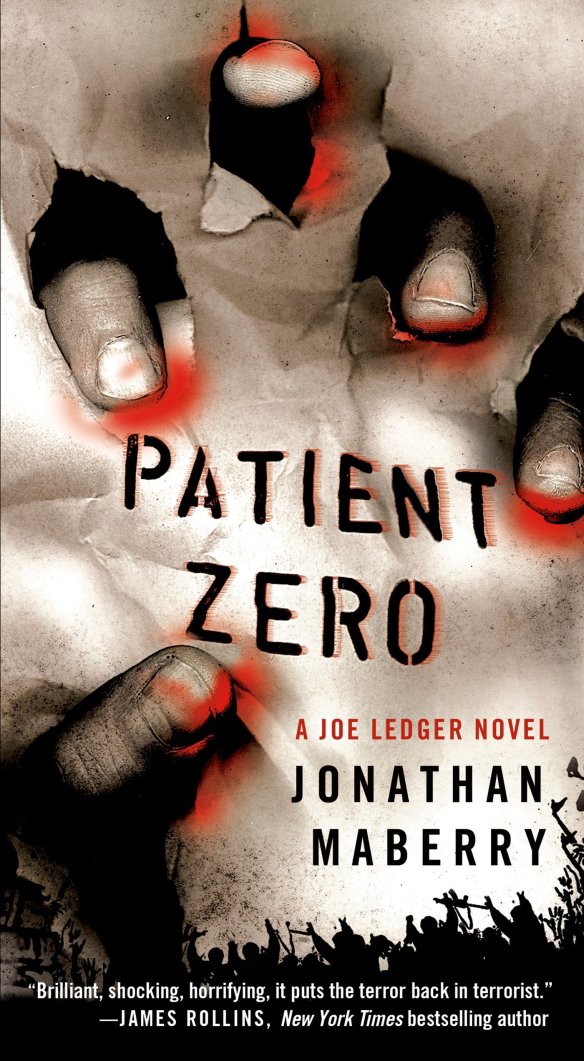
patientzero

For years, I avoided any series character. On a long enough timeline, all series characters become caricature, all writers (you can almost feel this happening) feeling like they have to deliver the fan-favorites from previous installments. Or, at the very least, they have to constantly remind new readers of certain things, a graph that pops up usually within the first thirty or fifty pages and breaks momentum down.  I love Stephen King, but the final three books of the Dark Tower saga feel always more lightweight than, say, the first and second, pulled down by the caricatures that had replaced Roland, Jake, Eddie, Savannah (also, King himself popping into the book always bugged me; a lazy way of explaining something).  The third book, The Wasteland, had enough cringe-worthy moments at the beginning that I almost died along with the giant bear.

And then I read a glowing FANGO review of Jonathan Maberry’s Patient Zero and thought, “What the hell.”

It was Maberry’s Joe Ledger character and F. Paul Wilson’s Repairman Jack that changed my view–somewhat (the stopping the action to explain a prior event lingers in the mid-series RJ books).

When I got two new Joe Ledger novels–Code Zero and Predator One–over the holidays, I decided to take the entire series out for a spin and get back into the world of the DMS.  (Another strike against series; I can’t read the latest installment without catching up with the prior books, something that becomes imperative if the lapse between reads is very long.)

Joe Ledger is a Baltimore cop who gets, essentially, shanghaied into the Department of Military Sciences (DMS), by Mr. Church, a mystery man who’s apparently immune to red tape or good taste (he chews vanilla wafers constantly, in a shocking denial of flavor).  Meanwhile, various factions–some corporate, some fundamentalist–are cooking up, basically, a zombie plague, and it’s up to Ledger, Church, Major Grace Courtland to stop it before it can be unleashed.

As a standalone novel, it’s pretty solid, but it’s in this thinking that some of the writing gets under a reader’s skin.  The post-climax is Maberry laying the series groundwork, a series of passages that could’ve been excised easily without the reader even noticing.

Moreover, at times, the structure is predictable–when Courtland is introduced, even though Maberry fleshes her out well, a reader knows that she’s going to be the love-interest for Ledger–and that makes some of the beats anticipated, which takes away from the flavor and reaction.

But, for those two things, Maberry writes with a propulsive, yank-you-forward style, the chapters and paragraphs short and punchy, producing a staccato rhythm that can pull you in like a really good drum solo.  Ledger is likable, and Maberry does a yeoman’s work to ensure that the supporting cast is as fleshed out as Ledger or Courtland; Gus Dietrich, another supporting cast member, is probably the only one who doesn’t evolve much beyond G.I. Joe action figure, leaving the most interesting thing about him to be his name.

The plot itself reads like the best action and horror popcorn movies–the ones you can enjoy without trying to overthink too much, but when Maberry goes deep on motivations or character, it doesn’t feel awkward or out-of-place.  Maberry’s capable of sharp, deep writing, but it feels clear that he’s resigned the Joe Ledger series to being “fun”.  Not that there’s anything wrong with that; not everything written has to about Something Very Deep to Make You Examine Your Life and Become Disappointed Yourself.  Reading, first and foremost, should be enjoyable and I can’t tolerate any form of snobbery that denies that fundamental (to me, anyway) right.

Which is awesome because Patient Zero, as well as the other novels in the Ledger series, is fun.

You can’t complain about that, now can you?